
Paver Restoration in the Lehigh Valley
What It Is, How It Works, and Why the Process Matters
Paver restoration is more than just cleaning and it’s definitely more than spraying water and calling it a day. At The Pressure Wash Company, paver restoration is a process, not a product. Our goal is to restore the appearance, stability, and long-term performance of your pavers in a way that actually makes sense for your property. We’re best known throughout the Lehigh Valley for paver restoration because we take the time to do it right, explain it clearly, and avoid selling work that won’t benefit you in the long run.
What Is Paver Restoration?
Paver restoration is the combination of cleaning, correcting, and rebuilding key elements of a paver system so it looks better, performs properly, and lasts longer. Depending on the condition of the surface, this may involve cleaning, joint sand replacement, structural repairs, re-leveling, or sealing but not every project needs every step. That’s where experience (and honesty) matter.
Our Six Phases of Paver Restoration
Every paver restoration project we perform is built around the following six phases. Some projects require all six. Others don’t — and that’s intentional.
Phase 1: Assessment
Every project starts with a detailed, in-person assessment. We don’t guess, and we don’t quote blindly. We evaluate the layout, grade, drainage, edging, joint condition, water runoff, and overall stability of the paver system. By the time we’re done, we usually know your patio or driveway almost as well as you do.
Phase 2: Deep Cleaning
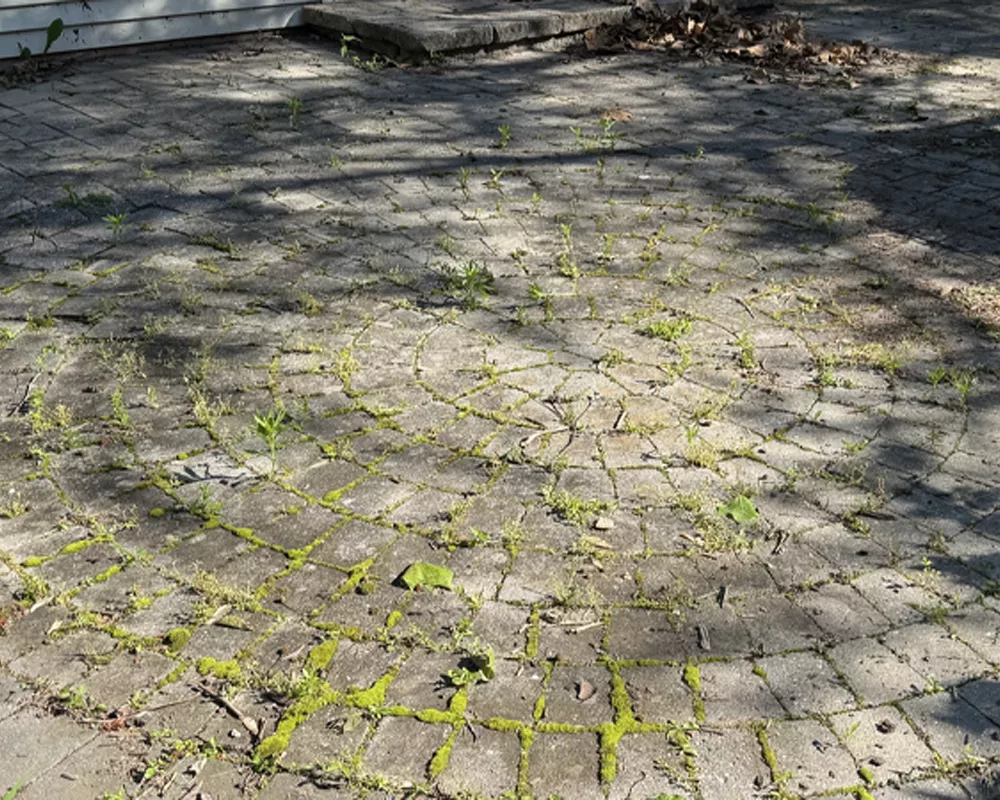
We remove built-up dirt, algae, moss, mildew, and organic staining using professional equipment and surface-appropriate methods. This step reveals the true condition of the pavers and prepares them for any corrective work.
Phase 3: Sand Removal
Old, failing joint sand is removed to allow for proper repairs and re-sanding. Skipping this step leads to premature failure — which is why we don’t.


Phase 4: Edge Repair & General Repairs
Pavers are only as strong as what holds them in place. We address damaged or missing edging and perform general repairs that prevent shifting, spreading, and future movement.
Phase 5: Repair of Loose Stones & Re-Leveling
Sunken, uneven, or loose pavers are corrected as needed. This step improves appearance, safety, drainage, and long-term performance. Not every project requires re-leveling, but when it does, it matters a lot.
Phase 6: Re-Sanding (and Sealing, When Appropriate)
Joint sand is replaced to lock pavers together and restore stability.
Sealing is a separate service and is only recommended when the paver system is structurally sound and properly prepared.
Our Philosophy: We Don’t Sell Work That Won’t Help You
We’re happy to perform partial restoration work such as cleaning and re-sanding when that’s the right solution. What we won’t do is sell you a service that won’t deliver results.
For example, sealing pavers that haven’t been properly repaired or re- leveled doesn’t make sense. It wastes your money, creates false expectations, and leads to frustration later. We’ve found that doing the right work, instead of all the work, leads to happier customers and better long-term outcomes. It’s not just a company policy it’s a moral one.
The Pre-Restoration Walkthrough
Before any project begins, we conduct a thorough walkthrough and conversation often lasting 30–40 minutes to understand how your space actually functions.
We look at:
- Grade and pitch
- Drainage and water flow
- Downspouts and runoff
- Mulch beds and surrounding elevations.
- Potential water traps or “birdbaths”.
- Electrical and water access
- Job logistics and site setup
If a project isn’t the right fit or if another solution makes more sense we’ll tell you. All recommendations are provided in a clear, no-pressure quote, and nothing moves forward unless you choose to proceed.
What It’s Like to Work With Us
That’s because we’re approachable, communicative, and genuinely enjoy what we do. We take the time to explain the process, walk you through the finished work, and answer questions without rushing.
More than a few customers have offered us a drink, a tip, or an invite back—not because we expect it, but because the experience feels personal and comfortable. You’ll meet Matt and Christine, not a sales rep. We’re the ones showing up, doing the work, and standing behind it. And yes—Matt really does love cleaning pavers and patios. That passion shows in the results, and it’s why so many customers feel confident trusting us with their home.


Is Paver Restoration Right for Your Property?
If your pavers are dull, unstable, uneven, or simply not performing the way they should, paver restoration may be the right solution. The best way to know is through an in-person assessment and an honest conversation about what your space actually needs.
Paver Restoration
Faq's
Paver restoration includes deep cleaning the surface, removing organic growth and stains, replacing joint sand, and restoring the appearance and stability of the pavers. Paver sealing is a separate service that provides protection and color enhancement.
Spring through fall is ideal. Winter freeze–thaw cycles often cause sand loss, shifting, and staining that become visible as temperatures rise.
Spring weather in the Lehigh Valley can be unpredictable. Pavers must be completely dry before sanding and sealing, and rain can delay these steps by several days.
Pavers typically need three to five consecutive dry days before sealing to ensure polymeric sand sets properly and lasts.
A 25% deposit is required to reserve your project date. The remaining balance for cleaning and sanding is due upon completion.
If sealing is selected, it is billed separately once weather conditions allow the work to be completed properly.
Deposits are refundable with at least seven (7) days’ notice. If the deposit was paid by credit card, any processing fees charged to us will be
deducted from the refund. Cancellations with less than seven days’ notice may result in a cancellation fee, as staffing and scheduling have already been committed.
Late winter, early spring and early summer fill quickly. We recommend scheduling as early as possible to secure availability and avoid long wait times.
